We recently read the book Night by Elie Wiesel. I personally have always loved historical literature whether it is fact or fiction. In sixth grade, it was in our curriculum to read Number the Stars by Louis Lowry. I thought it was a very intense but super interesting book. It was very hard for me to put it down. I think it is interesting to see a view of something that we did not experience. It is just like a fiction, it takes us away to something we would never experience ourselves but instead walks us through and shows the experience that that character went through. Diving into a historical literature book is like diving into an alternate universe. Of course, in history class, we read the historical account of what happened and what people went through, but it is from a broad, far away lense. With the novels, however, we can see a certain character's journey through the events that took place in a time that we only know the history of.
I believe in the importance of historical literature within a classroom because of the different point of view it gives students. They interpret the human experience for us. So instead of just getting a timeline of events, we can see what the people actually went through, their feelings and emotions, and their thought process through the entire thing. I understand the importance of learning history and the timeline of events that happened within each event that took place in history, but at the same time, students aren't going to care or respond in the same way that a novel from a specific view will provoke. By having historical literature on events such as WWII and Pearl Harbor will help students gain a better understanding of what happened and what the people actually went through and thought about. This not only gives our students a more extensive knowledge of the events that took place, but it also gives them an insight into what those people thought and felt and what went through their minds. I believe this is becoming even more important as these events get farther and farther into the past. We are losing people who went through these events and who were there, so we will no longer have people to account for what happened. All we have left is what was recorded and written down.
Source: https://www.edweek.org/ew/articles/1987/09/09/07200064.h07.html
Monday, March 12, 2018

Wednesday, March 7, 2018
Graphic Novels in the Classroom
The use of graphic novels in the classroom has become a more loudly talked about topic. There are so many different opinions on using them or not and how to use them in the classroom. In looking for something to write about, I found an article from the NCTE - the National Council of Teachers of English - that talked about people who use graphic novels and what they could be used for. I found that I agreed with their opening statement on the fact that comics were considered something more for young children or dare I say it "nerds/geeks" and not something for classroom curriculum in secondary education. I have never really thought too hard about using graphic novels in the classroom, but then I had remembered that in my freshman history class we used graphic novels in the classroom and as an assignment, we had to make our own comic strip. This was used during the time that we were discussing Greek mythology. It was different and interesting and a new way of doing things and expressing our ideas or thought processes in a different way.
There was a certain sentence that was in this article that really stood out to me about the concept of respect. "She also urges teachers to respect students’ enjoyment of comics and graphic novels and to view them not as “instructional materials” but as “tools for bridging” in- and out-of-school literacy experiences." Having respect and understanding for how our students connect to literature is important because not all of the student will connect to novels or poetry or to the same things you connected to. This saying says how we as teachers need to respect the students who enjoy graphic novels because they are still forms of literature that our students are reading on their own and connecting to outside of the classroom.
This article also goes over just a few different things that you could teach using graphic novels, such as, the punctuation of dialogue, paragraphing - beginning, middle and end of a story, and outlining. The visual aspect of the graphic novels can help students see the beginning middle and end and see the use of dialogue verses narration. This provides a visual for students to see what they are being taught and see it differently than a dialogue within a novel.
Overall, it was interesting to me to even find an article by the NCTE that included something about using graphic novels in the classroom. The fact that this article not only talks up the use of graphic novels in the classroom but it also talks about different ideas and uses for them within a classroom that ties to lessons found within a classroom.
I do love the visual aspect and showing students concepts in a visual way and in the future might even incorporate graphic novels myself in a classroom.
On a completely separate note, this article was last edited 9 years ago. So as relevant as this topic is today, it has been talked about for almost ten years now. Maybe it's time to actually do something with this knowledge.
http://www.ncte.org/magazine/archives/122031
Monday, March 5, 2018
Book Talk - The Rhyming Season - Edward Averett

Overview:
Squeaky clean, and devoid of any aspect of contemporary teen culture (no Internet, drugs or sex; rap is called "urban music"), this first-person narrative, set in a logging community, tells the story of a high-school senior who must learn to cope with a pile of grown-up issues: the recent loss of her basketball star brother, the shuttering of the town's mill and a peculiar basketball coach who believes in the power of poetry. Hanging tough, Brenda negotiates these issues by excelling in basketball and helping bring her team to the State Championship. At the same time, she must referee between her player pals, the antagonistic bunch of unemployed men and the eccentric coach who implements the practice of identifying each girl as a particular dead poet in the hope that poetry will help them develop insight into themselves and find the rhythm of basketball. Brenda's storytelling is superficial, her voice without personality and too often—particularly in her interactions with her father—rings emotionally false. Too many problems try to ratchet up the emotional temperature, and readers never get far enough in Brenda's head to heat up a connection. (Kirkus Reviews, August 15, 2005)
Topics: basketball, basketball for girls, grief, loss, family problems, high school, poetry, teenagers, small-town life, perseverance, and teamwork.
WHY THIS BOOK/RATIONALE:
I picked this book up in eighth grade on my own and then shortly after I had finished it we did a lesson plan on this book within our reading class. This book was used to introduce us to poetry. I connected to this book because I was living in a small town with little job support and a close-knit community. Also, this book is set in Washington State which makes it a ‘close-to-home’ kind of book. This book would be a great connection book for students to connect to their own lives because of the setting in a high school and the events that take place. Students can find themselves connecting to the main character Brenda and how she handles what life throws at her. This would also be a great book to help remind people that bad stuff does happen but you can’t dwell on it, you have to keep moving forward in your life, but that does not mean you have to forget about what happened. A great encouraging novel to never give up.
USE IN A CLASSROOM:
This book would most likely be used between the grades of 7-9 because of the easy read of it. It has a lexile of 660 which fits within the grade range it was given on Novelist. This book is set in high school so 9th graders might connect more to the book, but I still believe that there will be a great amount of connection in middle school students as well in grades seven and eight.
· This would be a great book to introduce a poetry unit and the versatile use of poetry and how poetry can connect to your life. You could have student’s google poems and find one that they really connect to and present it to the class.
· Personal reflections/journals would be a great tool to use with this book to help students express what they are feeling while they read it.
· You could connect this with pathos, logos, and ethos.
· Great reminder of how literature (ex: poetry) can be connected to almost anything (ex: basketball/grief) as a way of expression.
OBSTACLES:
· There is death within this book which could cause emotions in students
· There is a gender issue that could arise from a class discussion of the book – something a teacher should just be prepared for if it does arise.
· Deviant behavior – Ex: cutting down a rival schools tree
· Family issues could cause more ‘adult’ topics to come up, might make parents uncomfortable if students go home with those topics – something a teacher should just be prepared for if it does arise.
Sunday, March 4, 2018
Edgar Allen Poe
One of my favorite poems by Edgar Allen Poe is "Alone". I found it back in high school when we first were introduced to more intense poetry like Edgar Allen Poe's. I connected really easily to it because I was different in high school, I was weird and always had my nose in a book. So this poem I understood at a different level than most. I of course though did not completely connect fully to this poem until later on when I understood that just because I like different things does not mean I'm weird or abnormal. This is just another example for me that poetry is such a great tool to have in the classroom because of the many connections that students can make to poetry. Poetry opens the soul and can make deeper connections then we might even know, and it could help students get through something in their life.
Also, Edgar Allen Poe is somewhat a role model for some of the outcast students. With his style of writing, his topics of choice, and his self-expression within his poetry. Students can take his style and make it their own. They can express themselves by writing their own poetry and taking after Poe. Students can understand how poetry can be an outlet for them and how to use it outside the classroom as well.
Also, Poe's poetry can be used for so many different lessons throughout the years, but is it being overused? By the time I got to college, I was bored with Poe because of how much we studied it, analyzed it, and re-read it over and over and over again. It just got too repetitive. As teachers, we need to connect with the previous and post grades and figure out what they're using in their curriculum so that we can prevent turning a student off to literature or poetry, or any other thing we use within our curriculum.
Also, Edgar Allen Poe is somewhat a role model for some of the outcast students. With his style of writing, his topics of choice, and his self-expression within his poetry. Students can take his style and make it their own. They can express themselves by writing their own poetry and taking after Poe. Students can understand how poetry can be an outlet for them and how to use it outside the classroom as well.
Also, Poe's poetry can be used for so many different lessons throughout the years, but is it being overused? By the time I got to college, I was bored with Poe because of how much we studied it, analyzed it, and re-read it over and over and over again. It just got too repetitive. As teachers, we need to connect with the previous and post grades and figure out what they're using in their curriculum so that we can prevent turning a student off to literature or poetry, or any other thing we use within our curriculum.
Wednesday, February 28, 2018
Sherman Alexie
Sherman Alexis's book The Absolutely True Diary of a Part-Time Indian was a different read for me. I'm used to actual fiction, romance, and dystopian writings more than anything, so having a fictionalization of a true account was kind of different for me. The connections I tied from this book to other true stories of Native American tales made me see this book as less fictional. I am almost curious to know if this book is considered fictional because of how he writes the book instead of what he actually says within the book. This would be a book that I would love to do a Q&A with the author.
On a completely separate note, the contextualization within the book was awesome. I strongly believe in added context and realia to everything. I love the little comics included and the further connection it added to what was being said. It reminds me of metafiction, where you just keep dumping your thoughts. When you are writing and this random thought of a comic or how a character looks or anything that relates to what you just wrote pops into your head and you decide to write it down. It was a great view of the subconscious thought process of the author and I loved it. Giving context or realia to the words you are providing and also help provide a better understanding of what is being said. Students can draw better connections to words that are given context and can relate more to them.
The book, in general, I don't think I would include in a curriculum, but instead might use as an example of something or a couple pages as an example piece. This book has some intense topics that I would not recommend for a grade level below 11. You would also have to think about your students and your environment around the school before even thinking about having this book in the classroom.
On a completely separate note, the contextualization within the book was awesome. I strongly believe in added context and realia to everything. I love the little comics included and the further connection it added to what was being said. It reminds me of metafiction, where you just keep dumping your thoughts. When you are writing and this random thought of a comic or how a character looks or anything that relates to what you just wrote pops into your head and you decide to write it down. It was a great view of the subconscious thought process of the author and I loved it. Giving context or realia to the words you are providing and also help provide a better understanding of what is being said. Students can draw better connections to words that are given context and can relate more to them.
The book, in general, I don't think I would include in a curriculum, but instead might use as an example of something or a couple pages as an example piece. This book has some intense topics that I would not recommend for a grade level below 11. You would also have to think about your students and your environment around the school before even thinking about having this book in the classroom.
Monday, February 26, 2018
The Education of Margot Sanchez by Lilliam Rivera
This book was a great "discovering yourself" kind of book. It held great messages within it and had a great overall message of making sure you stay who you are and you don't change who you are for other people. This is an important concept for K-12 students to understand because of course, this is stuff they deal with on a daily. In school, you have the popular group along with all of the other groups and the totem pole of popularity. It is always the worst for the girls because of the passive aggressiveness, the gossip, and just bullying in general. This book would be a great read for teenage girls to maybe give them a second thought as to what they are doing in school and if they are truly being themselves.
The topic of urbanization is throughout the entire book but not the main theme. Rivera did a great job at showing the domino effect urbanization has on a small, locally-owned store versus a large superstore. I enjoyed that insight into this particular idea in this book. I am from a small town and every year I notice it growing more and more because more people are moving there. First, the high school was expanded and now housing is expanding. Currently, there are new apartment structures under construction which are awesome to see actually since there weren't any before. With more people comes change, unfortunately, all of the change is not always for the best. We are losing our only bowling alley because the owners just don't have the money to keep it running. The bowling alley is our only place of fun or activity for all ages. They have bowling leagues from ages 10-100. They have a special olympics bowling program to be fully inclusive, and they have a small arcade room for kids to just hang out in. That is not the only small business we have lost, we have lost hair salons, nail salons, mom and pop grocery stores, and we lost Rosaurs too. People are trying their hardest to come together and open a new shop here and there in the abandoned buildings, but it's becoming harder. Urbanization can be a good thing, but at the same time, it can have many consequences.
Also, Rivera did a great job with the multi-cultural aspect of the book. This book was not only centered around a Hispanic-American main character but also embraced the culture and environment they were living in. She did a great job with using the language throughout the book by including Spanish. I enjoyed the multi-cultural aspect of the book because of it diving into the culture and language of the family.
I'm not sure if I would personally teach this book in a classroom, but I might suggest it to people to read.
The topic of urbanization is throughout the entire book but not the main theme. Rivera did a great job at showing the domino effect urbanization has on a small, locally-owned store versus a large superstore. I enjoyed that insight into this particular idea in this book. I am from a small town and every year I notice it growing more and more because more people are moving there. First, the high school was expanded and now housing is expanding. Currently, there are new apartment structures under construction which are awesome to see actually since there weren't any before. With more people comes change, unfortunately, all of the change is not always for the best. We are losing our only bowling alley because the owners just don't have the money to keep it running. The bowling alley is our only place of fun or activity for all ages. They have bowling leagues from ages 10-100. They have a special olympics bowling program to be fully inclusive, and they have a small arcade room for kids to just hang out in. That is not the only small business we have lost, we have lost hair salons, nail salons, mom and pop grocery stores, and we lost Rosaurs too. People are trying their hardest to come together and open a new shop here and there in the abandoned buildings, but it's becoming harder. Urbanization can be a good thing, but at the same time, it can have many consequences.
Also, Rivera did a great job with the multi-cultural aspect of the book. This book was not only centered around a Hispanic-American main character but also embraced the culture and environment they were living in. She did a great job with using the language throughout the book by including Spanish. I enjoyed the multi-cultural aspect of the book because of it diving into the culture and language of the family.
I'm not sure if I would personally teach this book in a classroom, but I might suggest it to people to read.
Monday, February 19, 2018
Readicide
I want to start off by saying I completely agree that schools are killing the love of reading because of the practices in place. I used to hate reading the required readings in school. They were boring, or stupid, or over analyzed and it sucked. I used to completely skim the required reading, for homework purposes, and then read my own book. I always had the problem that my own book though was not in the school system and therefore I couldn’t get credit for reading it in my class. I noticed many students in my class though never did any of the readings for the in-class text and was always ‘winging-it’ with in-class discussions and homework. Also, everyone always hated SR – silent reading. There were only a few of us that actually enjoyed the silent reading time, where we were able to read our own books in the classroom.
I think one of the biggest problems with the required readings within the class was that every time we did one, it was for the same purpose. Follow the characters, follow the plot, summarize, follow the timeline, and write a book report. We did that all through middle school and then even into high school. Constantly spitting out summaries of either what we read or the entire book. The same purpose over and over again throughout the many years in grade school.
As students get older, they need a better purpose to motivate them to do things. The purpose should not stay the same throughout the years, it should get more complex, more individual and provide an authentic reading experience. We as teachers need to remember to relate the students to the reading. We want them to stop thinking, “oh we are reading another book and summarizing it?” Also, as much as I love the books I read in middle school and high school, they are starting to become less relatable to the newer generations. For example, The Outsiders was what I read in seventh grade and was considered a “diverse” book because it was about a different era. Granted, I enjoyed it, it was an interesting book for me, however, today's generations are not going to relate to the boys in that book anymore and are not going to understand some of the things they do or say in that book. To teach that book today, there would have to be a ton of scaffolding to go before it and maybe even a history lesson for kids to understand how things were back then. So we have to make sure we are updating our curriculum and making sure that what we are using in our class is easily relatable to the ‘day and age’ we are in. It is the same aspect with the development of technology in the classroom and how that is updated almost every year or so, we need to be doing the same with our curriculum and readings especially to keep up with the generations.
The point Gallagher makes about the fact that schools are valuing the development of test-takers more than readers, or anything else for that matter, I completely agree with as well. I know by now everyone knows about how controversial the subject of schools teaching to the test is, and how people are for and against it and everywhere in-between. For Gallagher to bring up that point was interesting to me to see how he specified it as one of the causes of readicide. Don’t get me wrong, I see that it can be a cause for readicide, but at the same time I slightly disagree. This is where I believe the teacher over-teaching the book could play a bigger role than the teaching to the test aspect. We have to teach to the test and the standards with everything we do, it is just up to us as teachers to make sure our curriculum pertains to our students and is still giving students purpose, connections, and motivation.
Monday, February 12, 2018
"I read it, but I don't get it" - Cris Tovani
First off, I love this book.
How he started his classroom by telling the students basically how stupid book reports were and how he even used to cheat reading too was great. It was interesting to hear about his way. I guess thinking about it, my way of 'cheating reading' was skimming. I skimmed the first chapter, then one or two in the middle, and then the end. That is how I used to write book reports. Unless I was actually interested in the book, then I read the entire thing. But to be honest, my skimming is what got me through most of my humanities classes here at Eastern. One thing Tovani mentioned was seven strategies used by successful readers "existing knowledge, ask questions, draw inferences, monitor their comprehension, "fix-up" strategies when meaning breaks down, determine what is important, and synthesize information". I have actually been over these strategies before in my ESL classes, even though they were explicitly said like they are in this book. Even right now, we are talking about the steps of pre-reading, during reading, and post-reading and activities and things that you can do in each step. Which is awesome because that relates so much to that article we read from the Universities of California. So I have all of this background knowledge from different classes and main topics for me to connect and even apply to my own classroom.
Along with the strategies, he also talked about six cues that readers use, which I actually really liked. They are graphophonic cues, lexical cues, syntactic cues, semantic cues, schematic cues, and pragmatic cues. Again, this relates back to my ESL classes and how English language learners learn to read. The connections from this book to my classes were numerous and helpful. They may even be more helpful for that class than this class.
Tovani mentioned in chapter three in the subsection "Thinking Aloud" that "thinking aloud show students how an expert reader makes sense of the text. By sharing your thinking out loud, you make the elusive process of comprehension more concrete." (26). Again, with my connection to ESL, I can understand this and the fact that it also provides that auditory/visual effect for reading. If you are reading something that is also on a screen, you can talk out loud as you question things when you pre-read. One example would be the titles and sub-titles. Before you start reading, you can go over the title and sub-titles found within the text and draw inferences maybe make predictions, maybe even talk about it and think about what you already know relating to them.
One concept that was widely used throughout the book was self-monitoring. How students need to be in charge of their own reading and be "conscious of the thinking taking place inside his head." (35). Throughout any lesson, we have to make sure students are the spotlight, not ourselves. We should be trying our hardest to make students more aware of the capability they have on their own and the responsibility they have. Students are in charge of their own choices and their own learning. It's just like that saying, "you can lead a horse to water but you can't make him drink", you can give students everything they need to succeed, but you can't make them succeed, that is up to them. You are just there to support and set them up for success.
Tovani provided an appendix full of worksheets that he personally used within his classroom. Just looking through them, I can already see the potential for many of them to be applied to my current edTPA. I enjoyed the fact that they are focused on the students' connections, inferences, predictions, thoughts, and opinions. All of the worksheets he provided could encourage students to do these things on their own when reading on their own later in life. These worksheets connect with the strategies he provided within the first chapter. They are a great way of explicitly showing the students how to use the strategies he gives them.
How he started his classroom by telling the students basically how stupid book reports were and how he even used to cheat reading too was great. It was interesting to hear about his way. I guess thinking about it, my way of 'cheating reading' was skimming. I skimmed the first chapter, then one or two in the middle, and then the end. That is how I used to write book reports. Unless I was actually interested in the book, then I read the entire thing. But to be honest, my skimming is what got me through most of my humanities classes here at Eastern. One thing Tovani mentioned was seven strategies used by successful readers "existing knowledge, ask questions, draw inferences, monitor their comprehension, "fix-up" strategies when meaning breaks down, determine what is important, and synthesize information". I have actually been over these strategies before in my ESL classes, even though they were explicitly said like they are in this book. Even right now, we are talking about the steps of pre-reading, during reading, and post-reading and activities and things that you can do in each step. Which is awesome because that relates so much to that article we read from the Universities of California. So I have all of this background knowledge from different classes and main topics for me to connect and even apply to my own classroom.
Along with the strategies, he also talked about six cues that readers use, which I actually really liked. They are graphophonic cues, lexical cues, syntactic cues, semantic cues, schematic cues, and pragmatic cues. Again, this relates back to my ESL classes and how English language learners learn to read. The connections from this book to my classes were numerous and helpful. They may even be more helpful for that class than this class.
Tovani mentioned in chapter three in the subsection "Thinking Aloud" that "thinking aloud show students how an expert reader makes sense of the text. By sharing your thinking out loud, you make the elusive process of comprehension more concrete." (26). Again, with my connection to ESL, I can understand this and the fact that it also provides that auditory/visual effect for reading. If you are reading something that is also on a screen, you can talk out loud as you question things when you pre-read. One example would be the titles and sub-titles. Before you start reading, you can go over the title and sub-titles found within the text and draw inferences maybe make predictions, maybe even talk about it and think about what you already know relating to them.
One concept that was widely used throughout the book was self-monitoring. How students need to be in charge of their own reading and be "conscious of the thinking taking place inside his head." (35). Throughout any lesson, we have to make sure students are the spotlight, not ourselves. We should be trying our hardest to make students more aware of the capability they have on their own and the responsibility they have. Students are in charge of their own choices and their own learning. It's just like that saying, "you can lead a horse to water but you can't make him drink", you can give students everything they need to succeed, but you can't make them succeed, that is up to them. You are just there to support and set them up for success.
Tovani provided an appendix full of worksheets that he personally used within his classroom. Just looking through them, I can already see the potential for many of them to be applied to my current edTPA. I enjoyed the fact that they are focused on the students' connections, inferences, predictions, thoughts, and opinions. All of the worksheets he provided could encourage students to do these things on their own when reading on their own later in life. These worksheets connect with the strategies he provided within the first chapter. They are a great way of explicitly showing the students how to use the strategies he gives them.
edTPA - Making Good Decisions
Within this informational PDF was a sub-section called "How do I represent my thinking and teaching in writing". This sub-section actually helped me think more clearly about the edTPA. All of our choices and how we decide to do things within our classroom as teachers shows our thinking. It shows our originality as a person and how and why we decided to do a certain activity or teach a lesson a certain way. This is the originality factor to teaching that I love. We have the freedom to teach and express our own thoughts and ideas in the classroom as we please. It might not match other teacher's or be perfect, but it's us. But even so, with that originality factor, we still have to justify and give a constant rationale for why we chose to do things a certain way. As teachers, it seems as if we are constantly going to have to be explaining ourselves. I'm not quite sure how I feel about that aspect, but of course, I'm going to do it.
I love how they even included in there "Perfect teaching is not expected". Well duh, no one is perfect, there will never be a perfect teacher.
Giving purpose to everything we do is important as well. It is called our learning objective, but it is really the purpose. What is the purpose of the lesson? What is your purpose for teaching this lesson? how does it connect to other lesson purposes? Understanding it this way is way easier for me to clearly see what I'm doing.
Another comment made is "If you focus only on teaching facts and/or following procedures without deepening students' understanding of related concepts, you will not fully address your subject-specific learning focus." Even though this is very specific, it is broadly true. This actually relates back to the "pedagogy of oppression" and the idea of a banking system at schools. If teachers are constantly spitting out facts and procedures and telling students what to do without having the students think for themselves or provide their own opinions, then they won't actually be learning anything. They will honestly only be learning how to memorize and repeat. I'm glad that this was included within here. It helps reiterate the fact that we are deepening students' understanding of not only what we are teaching, but also their own thoughts and opinions on it and their own way of understanding it.
I love how they even included in there "Perfect teaching is not expected". Well duh, no one is perfect, there will never be a perfect teacher.
Giving purpose to everything we do is important as well. It is called our learning objective, but it is really the purpose. What is the purpose of the lesson? What is your purpose for teaching this lesson? how does it connect to other lesson purposes? Understanding it this way is way easier for me to clearly see what I'm doing.
Another comment made is "If you focus only on teaching facts and/or following procedures without deepening students' understanding of related concepts, you will not fully address your subject-specific learning focus." Even though this is very specific, it is broadly true. This actually relates back to the "pedagogy of oppression" and the idea of a banking system at schools. If teachers are constantly spitting out facts and procedures and telling students what to do without having the students think for themselves or provide their own opinions, then they won't actually be learning anything. They will honestly only be learning how to memorize and repeat. I'm glad that this was included within here. It helps reiterate the fact that we are deepening students' understanding of not only what we are teaching, but also their own thoughts and opinions on it and their own way of understanding it.
Sunday, February 4, 2018
Social Justice - Why is it important in our classrooms?
Social justice being taught within a classroom is a touchy subject. Faculty might question it, administrators might question it, and parents might question it. However, students will encounter social justice every single day out in the world. Acknowledging the fact that our students face social justice and are keen observers of social justice and then relating that to academics in the classroom, can help students make real-world connections. Acknowledging and teaching social justice in the classroom is important because students may see it or experience it, but never understand it. Having an understanding of what social justice is what students need to be able to navigate the outside world and explore their own connections to social justice in the world. Students need to understand that they have a voice, they have a choice, and they have a right to stand up for their voice and their choice. With how much controversy and social justice that is in the world today, we need to be empowering our students to use their voice. Granted we also need to teach them how to use their voice appropriately and correctly.
According to Marilyn Cochran-Smith, "a social justice framework is one that "actively address[es] the dynamics of oppression, privilege, and isms, [and recognizes] that society is the product of historically rooted, institutionally sanctioned stratification along socially constructed group lines that include race, class, gender, secual orientation, and ability [among others]." (School of Education). Having a social justice framework means you must guide your students in understanding oppression, socialization, and challenging hierarchies. Guiding students on how to self-reflect on where they fit into this world and how they fit in will help them connect themselves. It may even guide you as a teacher. What does a social justice framework do? "It pays primary attention to how people, policies, practices, curricula, and institutions may be used to liberate rather than oppress those least served by our decision making." (School of Education).
Social justice is important in our classrooms. Helping students acknowledge their voice and understand what oppression is, can not only help them out in the world but also give insight into their own decisions and how they affect other people.
Quotes are pulled from: https://education.csuci.edu/justice-conference/faq.htm
An excerpt from a larger work.
I also found a teacher blog post that was very insightful and helped lead my own ideas. You can find it here: https://www.tolerance.org/magazine/why-teaching-about-social-justice-matters
According to Marilyn Cochran-Smith, "a social justice framework is one that "actively address[es] the dynamics of oppression, privilege, and isms, [and recognizes] that society is the product of historically rooted, institutionally sanctioned stratification along socially constructed group lines that include race, class, gender, secual orientation, and ability [among others]." (School of Education). Having a social justice framework means you must guide your students in understanding oppression, socialization, and challenging hierarchies. Guiding students on how to self-reflect on where they fit into this world and how they fit in will help them connect themselves. It may even guide you as a teacher. What does a social justice framework do? "It pays primary attention to how people, policies, practices, curricula, and institutions may be used to liberate rather than oppress those least served by our decision making." (School of Education).
Social justice is important in our classrooms. Helping students acknowledge their voice and understand what oppression is, can not only help them out in the world but also give insight into their own decisions and how they affect other people.
Quotes are pulled from: https://education.csuci.edu/justice-conference/faq.htm
An excerpt from a larger work.
I also found a teacher blog post that was very insightful and helped lead my own ideas. You can find it here: https://www.tolerance.org/magazine/why-teaching-about-social-justice-matters
Critical Pedagogy in an Urban High School English Classroom
Within this writing, there were several ideas and realizations that stood out to me. One of which was when they said that, "it was only with a pedagogy firmly committed to freedom and social change that we were able to motivate students to develop sophisticated academic literacies." (pg.4). With the word freedom being so powerful, this sentence stuck out to me. As an English teacher, I want to give my students as much freedom in the classroom as possible, but I also want them to learn and get their work done. Giving students freedom within assignments, however, can be the most motivating thing you can do. By giving your students the freedom to find their own purpose and topic for their writing, you are giving them something they want to do. I have always loved being able to choose my own topic for my papers, just because then I was more motivated to write them.
Another thing that I found interesting was the realization that multiculturalism in the literature we choose for our students was "simply offering texts written by people of color or featuring people of color as the protagonist." (5). I never really thought about this personally, but now reflecting on all of the multicultural readings I have done, I'm recognizing the fact that our readings were just written by people of color of including at least one protagonist character that was of color. Later on, it says how, "these so-called multicultural texts that were equally, if not more, disempowering of students of color than more traditional less diverse texts. An oppressive rendering of a culturally diverse text is still oppressive." (5). This is something we need to remember as teachers. We need to think about what our students are reading and how it could relate in any way to them. If we are claiming a text is multicultural, it needs to portray that culture, not just be written by someone of that culture. Especially in this day and age, we have to be careful what we are giving our students to read. This relates to our book talks in class and how we present our rationale for each book we discuss about teaching it in the classroom. Having multicultural texts can help our students "arrive at an implicit understanding of what they have in common with those they have been taught to perceive as different." (6). Children are not taught to see people differently based off of their skin or cultural, they just make friends. Why are we not teaching our students throughout the years to continue seeing other skin-tones and cultures as just people rather than 'different' or any other social depiction they might have? Including the multicultural texts and having "cross-cultural literacy study may allow us to see ourselves in others even as we see these others as different in important and extraordinary ways." (6).
On the topic of texts, I liked how it was put on the reasoning behind using literature of other times and places: "they would begin to make connections to their own everyday experiences while gaining an understanding of similarities across time and cultures." (5-6). So instead of having students break down the readings and pick them apart, we can have them draw connections between then and now and understand how things were and how things have changed. This is so interesting to me and different then what I've been doing the last three years. In almost all of our literature classes, we are picking apart and tearing down the readings instead of connecting and finding understanding in them. A connecting idea that was discussed as well is the notion of using popular culture in the classroom. By having pop-culture in the classroom we are giving the students the potential to connect their own everyday experiences to their academic literacies. It also gives students an opportunity to study their own everyday culture and what is in their culture. I do believe this is a great concept, it would be more interesting to see more research on this particular concept and see how you could incorporate it into the classroom.
Another thing that I found interesting was the realization that multiculturalism in the literature we choose for our students was "simply offering texts written by people of color or featuring people of color as the protagonist." (5). I never really thought about this personally, but now reflecting on all of the multicultural readings I have done, I'm recognizing the fact that our readings were just written by people of color of including at least one protagonist character that was of color. Later on, it says how, "these so-called multicultural texts that were equally, if not more, disempowering of students of color than more traditional less diverse texts. An oppressive rendering of a culturally diverse text is still oppressive." (5). This is something we need to remember as teachers. We need to think about what our students are reading and how it could relate in any way to them. If we are claiming a text is multicultural, it needs to portray that culture, not just be written by someone of that culture. Especially in this day and age, we have to be careful what we are giving our students to read. This relates to our book talks in class and how we present our rationale for each book we discuss about teaching it in the classroom. Having multicultural texts can help our students "arrive at an implicit understanding of what they have in common with those they have been taught to perceive as different." (6). Children are not taught to see people differently based off of their skin or cultural, they just make friends. Why are we not teaching our students throughout the years to continue seeing other skin-tones and cultures as just people rather than 'different' or any other social depiction they might have? Including the multicultural texts and having "cross-cultural literacy study may allow us to see ourselves in others even as we see these others as different in important and extraordinary ways." (6).
On the topic of texts, I liked how it was put on the reasoning behind using literature of other times and places: "they would begin to make connections to their own everyday experiences while gaining an understanding of similarities across time and cultures." (5-6). So instead of having students break down the readings and pick them apart, we can have them draw connections between then and now and understand how things were and how things have changed. This is so interesting to me and different then what I've been doing the last three years. In almost all of our literature classes, we are picking apart and tearing down the readings instead of connecting and finding understanding in them. A connecting idea that was discussed as well is the notion of using popular culture in the classroom. By having pop-culture in the classroom we are giving the students the potential to connect their own everyday experiences to their academic literacies. It also gives students an opportunity to study their own everyday culture and what is in their culture. I do believe this is a great concept, it would be more interesting to see more research on this particular concept and see how you could incorporate it into the classroom.
Monday, January 29, 2018
Ch.2 of Pedagogy of the Oppressed - Paulo Freire
I completely am in agreement with the banking concept of education. In schools these days there is so much listen and repeat and students constantly just regurgitating what they were taught without understanding or actually taking it in. It really bothers me that schools are like this. That is why I am so fond of not having tests, but instead having free-writes or summary's being written by the students. The teacher should not be the subject of the learning process. The teacher should just be a mere assistant to provide help and instructions to set the students up for success. The students are the subjects here. Yes, teachers are there to teach, but not by having the students listen and repeat. Instead, there needs to be free thinking and personal strategies that students develop on their own to find understanding and meaning in things.
The assumption of a dichotomy between human beings and the world is complete crap as well. We are not empty minds "open to the reception of deposits of reality from the world outside". We are not spectators, or at least we shouldn't be. We should show our students how to be themselves, structure their essays in their own ways, read and understand things in their own ways, find meanings for words in their own ways. We should set students up for success at being able to re-create an idea or notion. Maybe a student reads a book, but the ending was nothing like they imagined, so they re-create an ending for that book. That's exactly how fan-fiction started. That never used to be a thing until someone made it a thing. Someone stepped out there and put their ideas on top of someone else's and re-created something. It's the same thing artists all over the world do with their artwork. They re-create something. A day at the park could look one way to one person and a completely different way to another person. Our students should be encouraged to re-create and re-imagine instead of being encouraged to regurgitate.
One of the statements that stuck out to me in a "hits-you-in-the-face" kind of way was, "Education as the exercise of domination stimulates the credulity of students, with the ideological intent of indoctrinating them to adapt to the world of oppression." This statement shows that this practice of the banking concept in schools is leading our students into oppression. They are not taking anything away from what we are saying to them. Once they have repeated what we have said, it leaves their mind. There is no food for thought, there is no insight or meaning into what they have been told. There is just, "a=5", a word and definition, or a simple right or wrong.
The concept of "problem-posing" education is confusing but interesting as well. Within the explanation of this concept, there is a phrase about students and teachers that says, "They become jointly responsible for a process in which all grow." I absolutely love just this phrase right here. Mainly because as teachers, we never stop learning about how to teach, what works and doesn't work, how to do an activity, what activity to do, ect., we only adapt. Each batch of students, each class, each environment is going to be different. They are going to learn differently, experience things differently, and think differently. Teachers are constantly adapting to their students' needs in the classroom, which helps the teacher grow as well. Students are growing in their education and in their personalities, while a teacher is growing in their teaching, their style, their deliverance of material, and in their connections with the students. We will constantly be growing. We grew as students once, and now we are growing as teachers, but we are still learning from our students as our students learn from us.
The assumption of a dichotomy between human beings and the world is complete crap as well. We are not empty minds "open to the reception of deposits of reality from the world outside". We are not spectators, or at least we shouldn't be. We should show our students how to be themselves, structure their essays in their own ways, read and understand things in their own ways, find meanings for words in their own ways. We should set students up for success at being able to re-create an idea or notion. Maybe a student reads a book, but the ending was nothing like they imagined, so they re-create an ending for that book. That's exactly how fan-fiction started. That never used to be a thing until someone made it a thing. Someone stepped out there and put their ideas on top of someone else's and re-created something. It's the same thing artists all over the world do with their artwork. They re-create something. A day at the park could look one way to one person and a completely different way to another person. Our students should be encouraged to re-create and re-imagine instead of being encouraged to regurgitate.
One of the statements that stuck out to me in a "hits-you-in-the-face" kind of way was, "Education as the exercise of domination stimulates the credulity of students, with the ideological intent of indoctrinating them to adapt to the world of oppression." This statement shows that this practice of the banking concept in schools is leading our students into oppression. They are not taking anything away from what we are saying to them. Once they have repeated what we have said, it leaves their mind. There is no food for thought, there is no insight or meaning into what they have been told. There is just, "a=5", a word and definition, or a simple right or wrong.
The concept of "problem-posing" education is confusing but interesting as well. Within the explanation of this concept, there is a phrase about students and teachers that says, "They become jointly responsible for a process in which all grow." I absolutely love just this phrase right here. Mainly because as teachers, we never stop learning about how to teach, what works and doesn't work, how to do an activity, what activity to do, ect., we only adapt. Each batch of students, each class, each environment is going to be different. They are going to learn differently, experience things differently, and think differently. Teachers are constantly adapting to their students' needs in the classroom, which helps the teacher grow as well. Students are growing in their education and in their personalities, while a teacher is growing in their teaching, their style, their deliverance of material, and in their connections with the students. We will constantly be growing. We grew as students once, and now we are growing as teachers, but we are still learning from our students as our students learn from us.
Monday, January 22, 2018
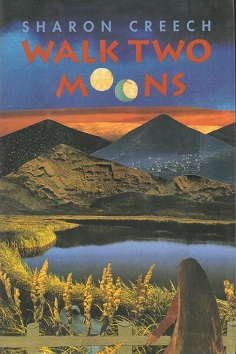
Book Talk on Walk Two Moons by Sharon Creech
Description of Book: A young girl named
Sal retraces her mother’s last route with her grandparents while telling the
story of her friend Phoebe. Sal’s mother left home suddenly and Sal’s dad moved
the two of them from their country home to a cookie cutter house with not even
enough grass for one cow. Sal’s story of her friend Phoebe shows many hidden
life lessons, along with what the power of imagination looks like. Sal also
tells several other stories about her time at their country home to give
herself a background.
Why I chose this
text: I chose this text because it was a great connection book to me when I
first read it back in middle school. It helps with students who may be going
through personal stuff at home and is inspiring by the use of conversational storytelling
and imagination.
Rationale: I
would use this book in a classroom because it has a great storyline for each
character and would be a great book for teaching the basics of rise of events
to climax and then the fall to the resolution. Also, this would be a great tool
to have students foreshadow and make predictions on their own of what might
happen.
Who is the text
appropriate for and why: This text would be appropriate for 6th
through 9th or 10th grade. It is a smaller book with a
lower lexile, so I would not recommend it for higher grades. It is a very conversational
book which will appeal better to middle school or early high school to get away
from the academic language used in classes.
How this book
could be used in a classroom, teaching ideas: This book could be used to go
over a basic format of a storyline with the rise, climax, fall, and resolution.
It follows the pattern nicely because of the road trip and the events that
occur while on the road trip. This would also be a great book to promote
writing short stories, free-writes, or even a narrative essay on a personal
event. Also, this would be a great book to teach vocabulary like pathos, ethos,
logos, and different strategies or stylistic approaches the author uses within
the book.
Obstacles/issues
using this text: The only issue I could see would be the discussion of
infant death because of the incident with the new baby’s birth, and the
discussion of death at the end of the book when we find out that the Mother
actually died in a bus accident. Also, the text is very basic and simple which
works perfect with the conversational style of the language. Some students may
not be as into it because of the simplistic and ‘easy’ nature of the language.
Another reason why this would be for grades 6th-8th and
maybe 9th.
Administrator’s
response to text: I do believe an administrator would approve of this text
after going over a plan of how to approach the topic of how the baby died.
Granted, it is not an over the top serious topic. Same would go for the topic
of death.
Parent’s response
to text: I cannot see the parents responding in a negative way to this
text. If they did respond negatively it would most likely be on the topic of
death in this book. If parents did have a problem with how I went over or
talked about death when it comes up, then I will discuss it with them and if
they still have a problem I will send them to my administrator.
Student’s response
to text: I believe the students will respond positively to this book
because of the style it is written in, and because it is not too old of a book
either. It might relate to students more so because of the aspect of moving
from country to city, losing a parent, making new friends, wild imaginations,
or even the humor that is shown in this book.
Other comments on
the text you should know: Again, this book is more meant for middle school
to maybe 9th grade students because of the conversational style of
language and the fact that the main character is thirteen. On another note, it
is a pretty great book.
Saturday, January 20, 2018
Assessing and Evaluating Students' Learning
Trying to find new and better ways to assess and evaluate our student's learning or understanding of anything is going to be a continuous on-going battle. Chapter 13 in Teaching Literature to Adolescents is all about ideas on figuring out what your students have learned.
We all have our personal opinions on assessments we like and don't like. Personally, I never liked tests or quizzes, I would much rather write a paper, reflection, or do just about anything else. Then again, now that I understand the use and the 'why' behind giving a quiz or a test, I have become less appalled at the idea of them. Tests will still make me uneasy, but quizzes I see potential and use for. I like that quizzes don't always have to be an actual graded assignment. Instead, it could be for participation, or for a teacher to just get an idea as to where their students are currently at and if they are understanding so far.
Interpretive strategies are suggested within this chapter, but also listed is the criteria for evaluating those interpretive strategies. One that stood out and seemed actually enjoyable to me is perspective-taking. The criteria for this strategy is "students compare and contrast characters' perspectives to infer tensions or conflicts between characters." (pg. 227). This would be a fun activity to do like midway through a book involving a protagonist and antagonist and for students to be able to make their own predictions or express thoughts and ideas about the characters. Not only would this show me that the students are reading and paying attention to the book, but also help them to become more interested in the book by making predictions about the characters.
We discussed previously on discussions as a way of teaching and using discussions in the classroom. I liked the suggestion of evaluating classroom discussions by paying attention to students' use of certain discussion skills like, "their frequency of participation, their ability to formulate an interpretation, provide support for their interpretation, restate others' interpretations, pose counter-interpretations to these others' interpretations, ask questions to the group, define an emerging consensus, define links to other texts or resources, and adopt certain critical lenses." (Pg.228). When we did discuss as a class the use of discussions in the classroom, we did not really talk about using them as a tool for evaluation. I honestly did not think about it, but it makes sense. This would also be something for students to reflect back on or take notes on to use later for a paper or another assignment. For them to be able to discuss their interpretations and provide support could help them later when writing an essay that needs claims and evidence.
As teachers, we need to make sure students are picking up what we are trying to get across to them or teach them. An idea presented in this chapter called "exit memos" sounds like a simple and easy way for teachers to determine what the students have taken in and what they might not be understanding. an "exit memo" is a freewrite where you ask the students to either reflect on what they learned or where you even just ask them what they have learned for that day in class. I personally like this idea because it isn't like a test where there is a bunch of stress on the students to make sure they regurgitate exactly what you have taught them. Instead, they can freely express in their own words what you taught them and/or what they are not understanding or catching onto. This is a great way to keep stress and anxiety levels down in a classroom, because in all honesty, who doesn't freak out when you hear the word 'test'.
We all have our personal opinions on assessments we like and don't like. Personally, I never liked tests or quizzes, I would much rather write a paper, reflection, or do just about anything else. Then again, now that I understand the use and the 'why' behind giving a quiz or a test, I have become less appalled at the idea of them. Tests will still make me uneasy, but quizzes I see potential and use for. I like that quizzes don't always have to be an actual graded assignment. Instead, it could be for participation, or for a teacher to just get an idea as to where their students are currently at and if they are understanding so far.
Interpretive strategies are suggested within this chapter, but also listed is the criteria for evaluating those interpretive strategies. One that stood out and seemed actually enjoyable to me is perspective-taking. The criteria for this strategy is "students compare and contrast characters' perspectives to infer tensions or conflicts between characters." (pg. 227). This would be a fun activity to do like midway through a book involving a protagonist and antagonist and for students to be able to make their own predictions or express thoughts and ideas about the characters. Not only would this show me that the students are reading and paying attention to the book, but also help them to become more interested in the book by making predictions about the characters.
We discussed previously on discussions as a way of teaching and using discussions in the classroom. I liked the suggestion of evaluating classroom discussions by paying attention to students' use of certain discussion skills like, "their frequency of participation, their ability to formulate an interpretation, provide support for their interpretation, restate others' interpretations, pose counter-interpretations to these others' interpretations, ask questions to the group, define an emerging consensus, define links to other texts or resources, and adopt certain critical lenses." (Pg.228). When we did discuss as a class the use of discussions in the classroom, we did not really talk about using them as a tool for evaluation. I honestly did not think about it, but it makes sense. This would also be something for students to reflect back on or take notes on to use later for a paper or another assignment. For them to be able to discuss their interpretations and provide support could help them later when writing an essay that needs claims and evidence.
As teachers, we need to make sure students are picking up what we are trying to get across to them or teach them. An idea presented in this chapter called "exit memos" sounds like a simple and easy way for teachers to determine what the students have taken in and what they might not be understanding. an "exit memo" is a freewrite where you ask the students to either reflect on what they learned or where you even just ask them what they have learned for that day in class. I personally like this idea because it isn't like a test where there is a bunch of stress on the students to make sure they regurgitate exactly what you have taught them. Instead, they can freely express in their own words what you taught them and/or what they are not understanding or catching onto. This is a great way to keep stress and anxiety levels down in a classroom, because in all honesty, who doesn't freak out when you hear the word 'test'.
CSU's Expository Reading and Template
Throughout my reading of the California State Universities Expository Reading and Writing course Assignment Template, I could not help but notice the sidebar to the left with the blue writing. I noticed how they would tell you the common core state standard that each activity correlated to and met. For example, how "Surveying the Text" meets standard 5a. Analyze the use of text features. I liked how it showed the common core standards for each individual activity presented in this template. It helped to give a 'why' to the reason for each activity in the template. In class, our teacher went over the reasons and gave us the 'why' behind his discussion and the questions for the discussion we had. As teachers, we constantly have to keep in the back of our mind why we are giving a certain assignment, why we are reading a certain book, or why we are doing a certain activity in the classroom. If we can't completely explain in a logical manner why we are doing something then we should reconsider doing it.
There were a few things about the template that I did like. One being that in pre-reading students are to make predictions and ask questions and then in the actual reading they are to reflect on their predictions to see if anything turned out to be true. I also enjoyed the suggested questions to use in each sub-section. These questions that were suggested helped paint the picture of the actual assignment in class a little better for me. Another activity within the template I liked was "Considering the Structure of the Text" (pg.8). Thinking back on my time in grade school, I can't really remember times where we focused on the structure of the text. The visual they give with drawing lines where the introduction ends and where the conclusion begins. Having students decide this for themselves makes them have to look deeper into whatever they are reading. The visual could also help them later down the road when structuring their own writing.
When this template talked about revising and editing, it had an activity called "Rhetorical Analysis of a Draft" (pg.24) which I actually thought was different but could be very effective. "A rhetorical analysis of a rough draft requires the writer to assess writing based on the purpose of the writing, the message of the argument, the needs of the audience, and the ethos the writer adopts." (pg.24). I personally wish I would have started thinking more about my audience and my purpose back in high school. I noticed last quarter when I wrote a narrative paper after not writing one for like three years, it was so difficult for me. I had to take like four steps back and remember why I was writing and who I was writing for. If you don't have a purpose for whatever you are writing, then you should just stop right there because you will not get very far. You have to remember your audience and your purpose.
There were a few things about the template that I did like. One being that in pre-reading students are to make predictions and ask questions and then in the actual reading they are to reflect on their predictions to see if anything turned out to be true. I also enjoyed the suggested questions to use in each sub-section. These questions that were suggested helped paint the picture of the actual assignment in class a little better for me. Another activity within the template I liked was "Considering the Structure of the Text" (pg.8). Thinking back on my time in grade school, I can't really remember times where we focused on the structure of the text. The visual they give with drawing lines where the introduction ends and where the conclusion begins. Having students decide this for themselves makes them have to look deeper into whatever they are reading. The visual could also help them later down the road when structuring their own writing.
When this template talked about revising and editing, it had an activity called "Rhetorical Analysis of a Draft" (pg.24) which I actually thought was different but could be very effective. "A rhetorical analysis of a rough draft requires the writer to assess writing based on the purpose of the writing, the message of the argument, the needs of the audience, and the ethos the writer adopts." (pg.24). I personally wish I would have started thinking more about my audience and my purpose back in high school. I noticed last quarter when I wrote a narrative paper after not writing one for like three years, it was so difficult for me. I had to take like four steps back and remember why I was writing and who I was writing for. If you don't have a purpose for whatever you are writing, then you should just stop right there because you will not get very far. You have to remember your audience and your purpose.
Wednesday, January 10, 2018
Common Core Standards - Reading
When looking at the common core standards for the first time, they can be confusing and a little much. There are a lot of words that would not make sense if you showed them to a parent. Teaching based off of the common core standards is not a bad thing. It is a universal group of standards that schools all over the country follow. Which means that even though each teacher has a different style of teaching, they are still teaching the same standard needed for their students. As teachers, however, we need to remember that parents will not understand when we say something like, "I am teaching your student how to analyze how complex characters (e.g., those with multiple or conflicting motivations) develop over the course of a text, interact with other characters, and advance the plot or develop the theme. As stated in the common core standard RL. 9-10.3." A parent would just smile and nod and act like they understand but in reality, people not well versed with the common core standards are not going to understand what they are saying. Instead, a teacher should explain how based off of the common core standards that I have to follow I have chosen to go this route with my lesson plan and chose these activities to teach the students how to show the development of characters in a story we are reading. When parents come to you asking you why you are teaching a certain thing in your classroom, you can not just spit out a common core standard and hope they understand.
The Reading: Literature section of the common core standards gives a nice broad overview of the basics of what students need to be able to do when reading a book or a story, but also says how the students need to become more analytical. Analyzing not only the theme or characters of a story but also what the author is doing as they are writing. In 9th-10th grades, students are becoming more analytical of the stories and the author's choices within the stories to answer the question of 'why did the author do this?'. The common core standards are providing a baseline for what the students should know and should be learning.
Overall I believe in common core standards and the use of the universally throughout the country. With the common core standards, teachers are able to understand what their students need to know and what their students need to accomplish.
The Reading: Literature section of the common core standards gives a nice broad overview of the basics of what students need to be able to do when reading a book or a story, but also says how the students need to become more analytical. Analyzing not only the theme or characters of a story but also what the author is doing as they are writing. In 9th-10th grades, students are becoming more analytical of the stories and the author's choices within the stories to answer the question of 'why did the author do this?'. The common core standards are providing a baseline for what the students should know and should be learning.
Overall I believe in common core standards and the use of the universally throughout the country. With the common core standards, teachers are able to understand what their students need to know and what their students need to accomplish.
Tuesday, January 9, 2018
"Discussion as a Way of Teaching" Brookfield
Stephen Brookfield's "Discussion as a Way of Teaching" is a great article overviewing the types of discussion that could be useful in a classroom. Having a student-orientated discussion in the classroom has always been an interesting interaction to witness and participate in personally and from that, I do feel that it is beneficial in a classroom. Personally, I like the structured examples of discussion that Brookfield gives in his article and the rules that help guide the discussion. Brookfield gives an example called "The Circle of Voices" where it is a circle of students going around in a circle discussing their ideas on a topic. Once the circle discussion is over, each student has to present to the class an idea that another student in their circle discussed instead of their own. Being able to regulate the discussions and make sure they do not get off track is a rough job for a teacher, but with a regulated, rule-oriented discussion like "The Circle of Voices" it could help students stay on track and all equally participate in the discussion.
Another great example Brookfield gave was "Mutual Invitation". Where the discussion is started by a facilitator and then chooses the next person to speak about the same topic. When that person is done speaking, they choose the next person, and so on. Students do have the option to pass, but they must still choose the next person to speak. When a topic arises that is heavily debatable or controversy, this would be a great way for everyone to express their opinions and ideas on a topic. The room could be divided into the 'for's', 'against's', and 'neutrals', and they can choose to have a student in their group speak or listen to a student in another group speak.
Many of Brookfield's examples could be used in many different situations or environments and can still be regulated by the teacher so that nothing gets out of control. Discussion in the classroom, I believe is a great tool for teaching, with the multiple attributes it promotes.
Having your students lead a discussion in a classroom, especially high school, can help you as a teacher show your respect for the students' voices. It also shows your confidence in them as students to be able to handle a student-led discussion on their own without you having to interject every five minutes. If students feel respected by their teacher, they tend to be more willing and engaged in the classroom.
Overall I did enjoy reading Stephen Brookfield's article and will probably keep it for the many examples it provides that I may one day use in my own classroom.
Another great example Brookfield gave was "Mutual Invitation". Where the discussion is started by a facilitator and then chooses the next person to speak about the same topic. When that person is done speaking, they choose the next person, and so on. Students do have the option to pass, but they must still choose the next person to speak. When a topic arises that is heavily debatable or controversy, this would be a great way for everyone to express their opinions and ideas on a topic. The room could be divided into the 'for's', 'against's', and 'neutrals', and they can choose to have a student in their group speak or listen to a student in another group speak.
Many of Brookfield's examples could be used in many different situations or environments and can still be regulated by the teacher so that nothing gets out of control. Discussion in the classroom, I believe is a great tool for teaching, with the multiple attributes it promotes.
Having your students lead a discussion in a classroom, especially high school, can help you as a teacher show your respect for the students' voices. It also shows your confidence in them as students to be able to handle a student-led discussion on their own without you having to interject every five minutes. If students feel respected by their teacher, they tend to be more willing and engaged in the classroom.
Overall I did enjoy reading Stephen Brookfield's article and will probably keep it for the many examples it provides that I may one day use in my own classroom.
Subscribe to:
Comments (Atom)