Overview:
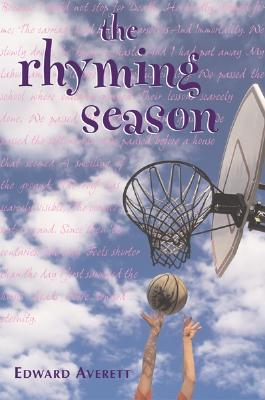
Squeaky clean, and devoid of any aspect of contemporary teen culture (no Internet, drugs or sex; rap is called "urban music"), this first-person narrative, set in a logging community, tells the story of a high-school senior who must learn to cope with a pile of grown-up issues: the recent loss of her basketball star brother, the shuttering of the town's mill and a peculiar basketball coach who believes in the power of poetry. Hanging tough, Brenda negotiates these issues by excelling in basketball and helping bring her team to the State Championship. At the same time, she must referee between her player pals, the antagonistic bunch of unemployed men and the eccentric coach who implements the practice of identifying each girl as a particular dead poet in the hope that poetry will help them develop insight into themselves and find the rhythm of basketball. Brenda's storytelling is superficial, her voice without personality and too often—particularly in her interactions with her father—rings emotionally false. Too many problems try to ratchet up the emotional temperature, and readers never get far enough in Brenda's head to heat up a connection. (Kirkus Reviews, August 15, 2005)
Topics: basketball, basketball for girls, grief, loss, family problems, high school, poetry, teenagers, small-town life, perseverance, and teamwork.
WHY THIS BOOK/RATIONALE:
I picked this book up in eighth grade on my own and then shortly after I had finished it we did a lesson plan on this book within our reading class. This book was used to introduce us to poetry. I connected to this book because I was living in a small town with little job support and a close-knit community. Also, this book is set in Washington State which makes it a ‘close-to-home’ kind of book. This book would be a great connection book for students to connect to their own lives because of the setting in a high school and the events that take place. Students can find themselves connecting to the main character Brenda and how she handles what life throws at her. This would also be a great book to help remind people that bad stuff does happen but you can’t dwell on it, you have to keep moving forward in your life, but that does not mean you have to forget about what happened. A great encouraging novel to never give up.
USE IN A CLASSROOM:
This book would most likely be used between the grades of 7-9 because of the easy read of it. It has a lexile of 660 which fits within the grade range it was given on Novelist. This book is set in high school so 9th graders might connect more to the book, but I still believe that there will be a great amount of connection in middle school students as well in grades seven and eight.
· This would be a great book to introduce a poetry unit and the versatile use of poetry and how poetry can connect to your life. You could have student’s google poems and find one that they really connect to and present it to the class.
· Personal reflections/journals would be a great tool to use with this book to help students express what they are feeling while they read it.
· You could connect this with pathos, logos, and ethos.
· Great reminder of how literature (ex: poetry) can be connected to almost anything (ex: basketball/grief) as a way of expression.
OBSTACLES:
· There is death within this book which could cause emotions in students
· There is a gender issue that could arise from a class discussion of the book – something a teacher should just be prepared for if it does arise.
· Deviant behavior – Ex: cutting down a rival schools tree
· Family issues could cause more ‘adult’ topics to come up, might make parents uncomfortable if students go home with those topics – something a teacher should just be prepared for if it does arise.

No comments:
Post a Comment